Have you ever noticed someone’s eyes looking bright green in sunlight but a little gray or hazel indoors? Green eyes can be tricky to pin down, and they’re not something you see every day. In fact, only about 2% of the world’s population has naturally green eyes. That’s roughly 1 in every 50 people.
But why are green eyes so rare? Green eyes don’t actually contain green pigment. Their color comes from a combination of genetics, melanin, and the way light interacts with the iris. They’re also more common in certain parts of the world, particularly in places like Ireland and Scotland. So, where you come from and the traits you inherit from your parents can play a part in whether you have green eyes.
Green Eyes Are Rarer Than You Think
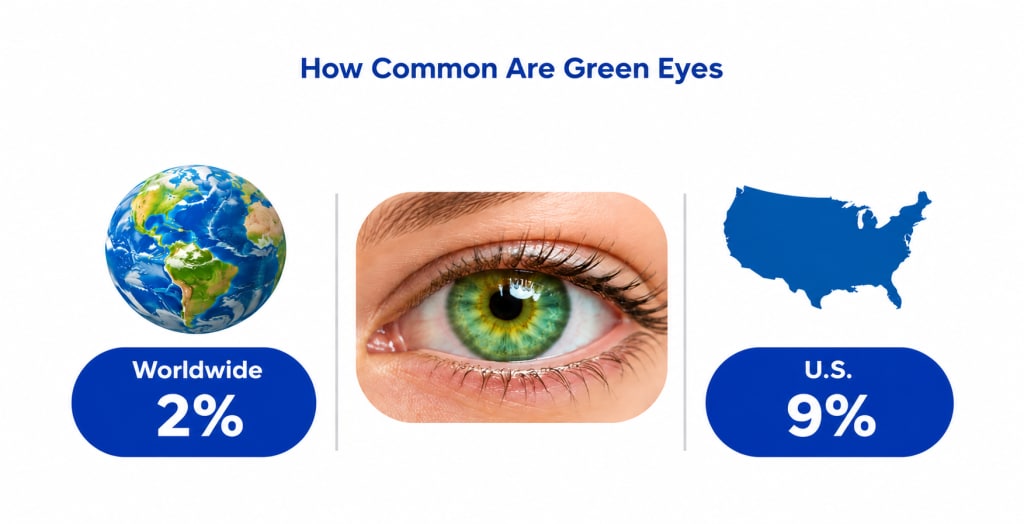
With around 8.3 billion people in the world in 2026, only an estimated 166 million have naturally green eyes. That might sound like a lot, but it’s a pretty small number when you consider the world’s entire population. In the United States, green eyes are a little more common. A 2014 survey conducted for the American Academy of Ophthalmology found that approximately 9% of Americans have green eyes, or about 9 out of every 100 people. Since the survey included around 2,000 adults, the figure is an estimate rather than an exact count of Americans with green eyes today.
Where you live can also make a difference in how often you see green eyes. In places where lighter eye colors are more common, spotting someone with green eyes might not seem unusual at all. In other parts of the world, you could go years without meeting someone who has them.
But Are Green Eyes the Rarest?
Among the four common eye colors (brown, blue, hazel, and green), green takes the top spot for being the rarest. Brown eyes are by far the most common worldwide, followed by blue and hazel. So, while green eyes might seem fairly common in some places, the numbers tell a different story when you look at the global population.
| Eye Color | Global Population | Typical Eye Color Appearance |
|---|---|---|
| Brown | 70–79% | Ranges from light honey brown to deep, dark brown |
| Blue | 8–10% | Ranges from pale blue to deeper blue, sometimes with gray tones |
| Hazel | About 5% | A mixture of green, brown, and golden tones |
| Green | About 2% | Predominantly green, sometimes with gold or gray undertones |
Note: Figures are estimates based on commonly reported eye-color distributions. Percentages vary by source and how eye colors are classified.
Where You're Most Likely to Spot Green Eyes
You might have better luck spotting someone with green eyes in Europe, particularly in Northern, Western, and Central Europe. While green eyes are rare worldwide, they’re much more familiar in places where lighter eye colors have been passed down through generations.
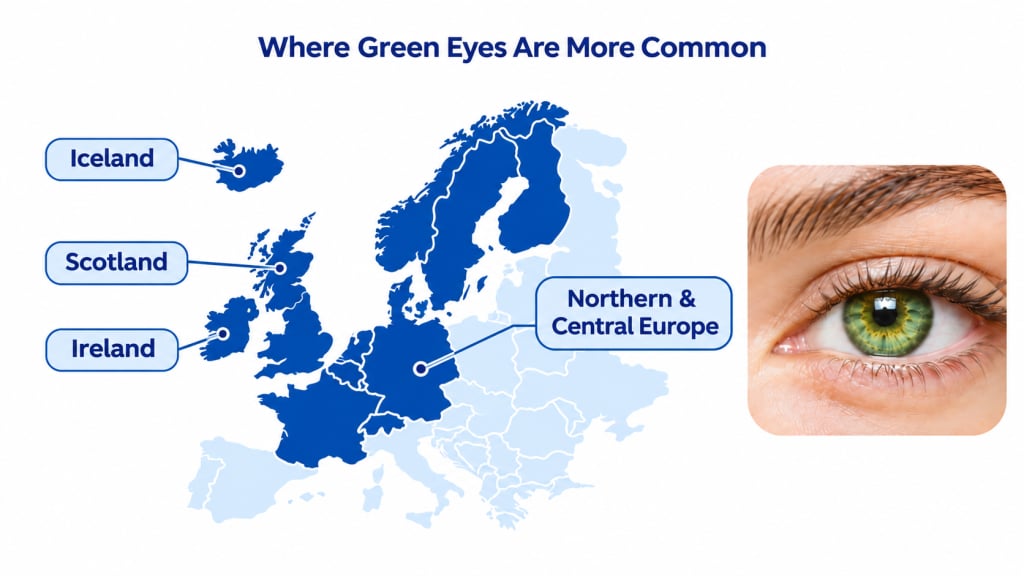
So, does that mean green eyes are only found in people of European descent? Not at all. People from different ethnic backgrounds can naturally have green eyes, too. The difference is simply how frequently the genetic traits associated with green eyes appear in certain populations.
How Green Eyes Get Their Color
Take a closer look at a green iris, and you’ll notice fine lines, tiny flecks, and areas that are slightly lighter or darker. These details come from the structure of the iris and how melanin is spread throughout it. The front layer of the iris, called the stroma, contains tiny collagen fibers that affect how light scatters through the eye.
Explore What Shapes Eye Color
See how melanin and light influence the appearance of different eye colors. Select an eye color to explore.
Green Eyes
Green Eyes
Green eyes usually have more melanin than blue eyes but less than brown eyes. Light scattering and natural pigment create their green appearance.
Melanin Level: Some
Blue Eyes
Blue Eyes
Blue eyes have very little melanin in the front layer of the iris. Light scattering creates their blue appearance.
Melanin Level: Very Little
Brown Eyes
Brown Eyes
Brown eyes contain more melanin. This pigment absorbs more light, giving the iris its darker appearance.
Melanin Level: More
Illustrative eye colors and melanin levels, not exact measurements.
This is why two people with green eyes may have noticeably different patterns. One person might have a fairly even green color, while another has a darker ring around the edge or golden flecks near the pupil. The amount and placement of pigment, along with the iris’s natural structure, give each pair of green eyes its own appearance.
Two Brown-Eyed Parents, One Green-Eyed Surprise
Two brown-eyed parents can have a green-eyed child, even when neither of them has green eyes. One of the more surprising facts about brown eyes is that people with brown eyes can still carry genetic variations linked to lighter eye colors. Genes such as OCA2 and HERC2 help control how much melanin develops in the iris. When a child inherits a combination of these variations that results in less melanin, their eyes may turn out green instead of brown.
This also explains why siblings can have different eye colors. Each child inherits a different mix of genes from their parents, so one might have brown eyes while another has green or blue. Some of these genetic variations may have been passed down through several generations, which is why a child’s eye color can sometimes resemble a grandparent’s more than either parent’s.
Green Eyes Come in More Than One Shade
Not all green eyes look the same. Some are so light they almost look gray, while others have a deep green color that stands out right away. There are even green eyes with hints of gold, blue, or brown. It all depends on the natural pigment in the iris and how light brings out the different tones.
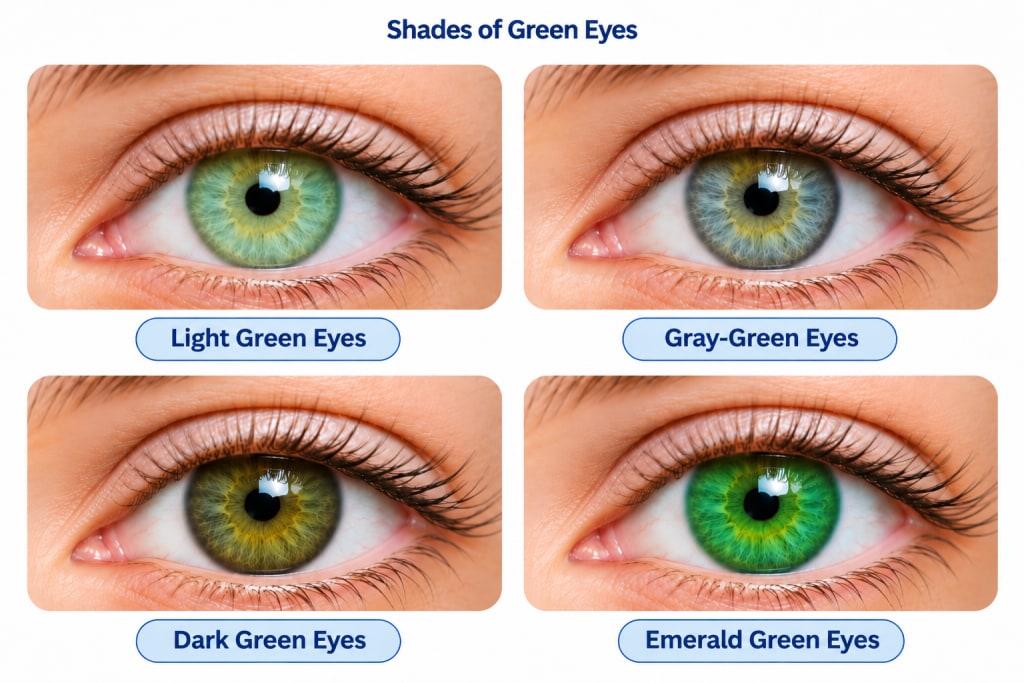
Light Green Eyes
Light green eyes have a soft, pale color that sometimes looks almost mint green. They may also have subtle hints of yellow or blue, giving them a lighter appearance than other green shades. Their color tends to stand out more in bright natural light, especially when sunlight brings out the lighter tones in the iris.
Gray-Green Eyes
Gray-green eyes have a mix of green and gray tones, giving them a cooler, more muted appearance. Depending on the lighting, the green may be more noticeable in sunlight, while the gray becomes more visible indoors. This can make gray-green eyes difficult to distinguish from naturally gray eyes.
Dark Green Eyes
Dark green eyes have a deeper, more subdued color, often with olive or brownish undertones. They may appear almost hazel in dim lighting, but their green color becomes easier to notice in brighter surroundings. Dark green eyes generally have more visible pigmentation than lighter green shades.
Emerald Green Eyes
Emerald green eyes have a rich, noticeable green color similar to the gemstone they’re named after. Unlike darker olive-green eyes, emerald green eyes tend to have a more vivid green appearance, sometimes with subtle golden or yellowish details in the iris.
While some green eye shades may seem harder to find than others, there isn’t enough reliable research to determine which shade is the rarest. Light green, gray-green, dark green, and emerald green are descriptive variations of natural green eye color rather than separate scientific classifications.
Green or Hazel? Here's How to Tell the Difference
Green and hazel eyes can be easy to mix up, especially when both have hints of gold or brown. Sometimes, you might even find yourself wondering whether someone’s eyes are green or hazel. The easiest way to tell them apart is to look at how the colors are spread across the iris.
Green or Hazel? See the Difference
Select an eye to compare its color pattern.
Green Eyes: What to Notice
Hazel Eyes: What to Notice
Illustrative comparison. Green and hazel eyes can overlap, and lighting affects their appearance.
Some eyes fall between these categories, which is why distinguishing green from hazel is not always straightforward. Green eyes tend to have a more consistent green appearance, while hazel eyes usually show a noticeable mixture of green, brown, and gold. A similar blend can be created with hazel contact lenses, which combine these tones for a warmer, mixed-color look.
For a more detailed comparison, see how green and hazel eyes differ in their colors and patterns.
Do Green Eyes Affect Eye Health?
Having green eyes doesn’t mean you’ll have better or worse eyesight than someone with brown or blue eyes. Your eye color has little to do with how clearly you see. Still, the lower amount of pigment in green eyes can make a difference in how they respond to bright light and may be linked to certain eye conditions.
Are Green Eyes More Sensitive to Light?
Ever noticed someone squinting more than usual on a sunny day? People with green eyes may be more sensitive to bright light or glare because their irises contain less melanin than darker-colored eyes. Melanin helps absorb light, so having less of it may make bright surroundings feel a little more uncomfortable.
Of course, not everyone with green eyes experiences this. Light sensitivity can also be caused by dry eyes, migraines, or other conditions. Wearing sunglasses that block 99-100% of UVA and UVB rays can help protect your eyes and make sunny days more comfortable, whatever your eye color. Some people also wear UV blocking contact lenses for added UV protection, but these don’t replace sunglasses because they don’t cover the entire eye or surrounding skin.
Are Green Eyes Linked to Any Eye Conditions?
Green eyes are generally just as healthy as any other eye color, but research has found a connection between lighter-colored eyes and certain eye conditions. According to the National Cancer Institute, people with lighter eyes may have a higher risk of developing uveal melanoma, a rare type of eye cancer. This doesn’t mean having green eyes will cause the condition. Eye color is just one of several factors that researchers have linked to the disease.
The good news is that most people with green eyes will never develop this condition. Keeping up with regular eye exams and paying attention to changes in your vision are simple ways to look after your eye health.
Can You Get Green Eyes With Colored Contact Lenses?
Colored contact lenses, also known as cosmetic contact lenses, are a simple way to try green eyes without changing your natural eye color. At 1-800-GET-LENS, you can explore different shades, from softer greens to deeper tones. Your natural eye color also makes a difference in how the lenses look. For example, some green contacts have a more opaque design to help the color stand out over darker brown eyes.
Just remember that colored contact lenses are still medical devices, even when they don’t correct your vision. Proper fitting and care are important for wearing colored contacts safely. You’ll need a valid prescription and fitting from an eye doctor before buying them. Following the recommended cleaning and replacement instructions also helps keep your eyes safe and comfortable.
Learn More About Green Eyes
Get answers to common questions about green eyes, including how their color develops, why different shades appear, and whether eye color affects vision.
Can Babies Be Born with Green Eyes?
Yes, some babies are born with green-looking eyes, but their eye color may change as they grow. Melanin continues to develop in the iris during early childhood, which can make their eyes lighter or darker. Most children develop a more stable eye color within their first few years.
Can Green Eyes Change Color with Age?
Green eyes usually stay the same color throughout adulthood. Still, changes in lighting can make them look lighter, darker, or slightly different in shade. A sudden or permanent change in eye color, especially in one eye, should be checked by an eye doctor.
Can Green Eyes Have Brown or Gold Spots?
Yes! Some people with green eyes have small brown or golden flecks scattered throughout their irises. Others have a different-colored ring around the pupil, which may be a feature called central heterochromia. These patterns are natural variations in how pigment is distributed in the iris.
Why Do Green Eyes Look Different in Photos?
Green eyes can look different in pictures because of lighting, camera settings, and reflections. Bright sunlight may bring out vivid green tones, while indoor lighting can make them appear gray or olive. Even the camera's white balance can affect how the color appears.
Are Green Eyes Associated with a Certain Hair Color?
Green eyes can occur with blonde, brown, black, or red hair. Although green eyes and red hair are often associated with each other, having one doesn't mean a person will have the other. Hair and eye color are influenced by different combinations of inherited genes.
Do People with Green Eyes See Better in the Dark?
There's no strong scientific evidence that people with green eyes have better night vision than those with other eye colors. The ability to see in low light depends more on how well the retina and other parts of the eye function than on the color of the iris.
References
American Academy of Ophthalmology. Your Blue Eyes Aren’t Really Blue. https://www.aao.org/eye-health/diseases/your-blue-eyes-arent-really-blue. Date Accessed: November 9, 2026.
All About Vision. Green Eyes: Rarity, Causes, Genetics and Other Facts. https://www.allaboutvision.com/eye-care/eye-anatomy/eye-color/green/. Date Accessed: November 9, 2026.
United Nations. World Population Prospects 2024. https://population.un.org/wpp/. Date Accessed: November 9, 2026.
MedlinePlus Genetics. Is Eye Color Determined by Genetics? https://medlineplus.gov/genetics/understanding/traits/eyecolor/. Date Accessed: November 9, 2026.
Cleveland Clinic. Eye Colors. https://my.clevelandclinic.org/health/articles/21576-eye-colors. Date Accessed: November 9, 2026.
National Eye Institute. Protecting Your Eyes From the Sun’s UV Light. https://www.nei.nih.gov/research-and-training/research-news/protecting-your-eyes-suns-uv-light. Date Accessed: November 10, 2026.
National Cancer Institute. Intraocular (Uveal) Melanoma Treatment. https://www.cancer.gov/types/eye/patient/intraocular-melanoma-treatment-pdq. Date Accessed: November 10, 2026.
U.S. Food and Drug Administration. Colored and Decorative Contact Lenses: A Prescription Is a Must. https://www.fda.gov/consumers/consumer-updates/colored-and-decorative-contact-lenses-prescription-must. Date Accessed: November 10, 2026.
American Academy of Pediatrics. What Color Will My Baby’s Eyes Be? https://www.healthychildren.org/English/ages-stages/baby/Pages/Newborn-Eye-Color.aspx. Date Accessed: November 10, 2026.